
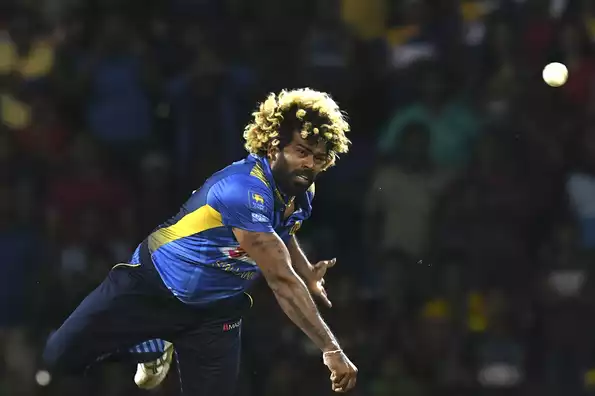
Lasith Malinga has always been celebrated as one of the most unpredictable and destructive fast bowlers in modern cricket. With his unorthodox sling-arm action and mastery of deadly yorkers, he carved a legacy built on dismantling world-class batting line-ups. On September 6, 2019, at Pallekele, he added another golden chapter to his story, producing a spell that reminded fans of his unmatched brilliance. Against New Zealand in the third T20I, Malinga stunned the cricketing world by claiming four wickets in four consecutive deliveries, a feat very few bowlers have ever achieved.
What made this spell remarkable was not just the dismissals but the timing and precision of each delivery. At 36 years old, with Sri Lanka under pressure defending a modest total, Malinga rose to the occasion, creating a historic moment in T20I cricket.
The Build-Up to a Historic Night
Lasith Malinga has long been recognized as one of cricket’s most unique and destructive fast bowlers. Known for his sling-arm action and ability to bowl lethal yorkers, the Sri Lankan legend carried a reputation for dismantling batting line-ups across formats. On September 6, 2019, at Pallekele, Malinga once again proved why he belongs among the greatest. Facing New Zealand in the third T20I, the stage was already tense. Sri Lanka had only posted 125 runs on the board after winning the toss and choosing to bat. The modest total left fans wondering whether their team could defend such a score against a strong New Zealand side. What followed, however, was an unforgettable spell of fast bowling brilliance.
Malinga’s Early Pressure with the New Ball
As captain, Malinga decided to take responsibility by opening the bowling himself. In his very first over, he set the tone by keeping things tight and probing around a good length. There was no early breakthrough, but he was clearly setting the stage for something bigger. When he returned for his second over, the magic began. Every delivery showcased his mastery of swing and his instinct for attacking batsmen with precision. What was supposed to be a routine chase for New Zealand quickly turned into a nightmare.
The First Breakthrough: Munro Bowled
Malinga’s first victim was Colin Munro, a dangerous striker capable of taking the game away within a few overs. At 2.3 overs, Malinga produced a 140 kph yorker that Munro simply could not handle. After setting him up with a short ball earlier, Malinga unleashed a perfect inswinging delivery that crashed into the leg stump. Munro, flat-footed and beaten for pace, was dismissed for 12. That wicket not only broke the Kiwi momentum but also gave Malinga his 100th T20I scalp, making him the first bowler in history to achieve the milestone. At 36 years old, Malinga had just shown the world he still had the firepower to dominate.
Rutherford Falls First Ball
Hamish Rutherford walked in under pressure, making a return to international cricket after six years. Unfortunately for him, his comeback lasted just one ball. Malinga, fired up, delivered another inswinger that trapped Rutherford right in front. The Sri Lankans immediately went for a review after the umpire turned it down, and replays confirmed that the ball was crashing into the stumps. Rutherford was gone for a golden duck. The scoreboard suddenly looked shaky, and New Zealand were rocked by two wickets in consecutive deliveries.
The Hat-Trick Moment: de Grandhomme Bowled
The crowd roared as Malinga steamed in for the hat-trick ball. On strike was Colin de Grandhomme, a batsman in fine form throughout the series. But even form could not save him from Malinga’s genius. Expecting a yorker, de Grandhomme tried to prepare for the delivery, yet he was undone by the sheer swing and accuracy. The ball went past his bat and clattered into the stumps. Malinga had achieved yet another hat-trick, his fifth in international cricket, a record in itself. His celebration was electric as he pointed to the back of his shirt, reminding everyone of the name that has terrorized batsmen for nearly two decades.
The Fourth Successive Wicket: Ross Taylor Trapped
The question now was simple: could Malinga make it four in four? History had seen him do it once before, against South Africa in the 2007 World Cup. Standing between him and another record was veteran Ross Taylor. With all his experience, Taylor was expected to hold steady. Yet, even he could not resist Malinga’s perfect yorker. The ball swung in and struck him plumb in front of the middle stump. The umpire had no hesitation, and Malinga had done the unthinkable once again, four wickets in four balls. The scoreboard told a shocking story as New Zealand found themselves collapsing under the weight of Malinga’s brilliance.
Completing the Five-For with Seifert
Even after the rare feat of four wickets in four balls, Malinga wasn’t finished. He returned later to claim his fifth wicket, dismissing Tim Seifert with a clever delivery outside off. This time, it wasn’t a yorker but a wide full ball that tempted the batsman into driving. Seifert edged it straight to slip, giving Malinga figures of 5 wickets in his spell. His final numbers read an astonishing 4 overs, 1 maiden, 6 runs, and 5 wickets. Such domination in a T20 match is almost unheard of, especially against a team like New Zealand.
Why This Spell Was Special
Several factors made this spell unforgettable. First, Malinga was 36 years old at the time, long past the prime years of pace bowlers. Yet he managed to consistently touch 140 kph and deliver with the same venom he had in his early career. Second, the achievement came at a time when Sri Lanka desperately needed a win, having already lost the series. His spell gave the hosts a chance to restore pride in front of their home crowd. Lastly, it was not just about numbers; it was about the artistry of fast bowling. Every delivery was planned, every dismissal executed with surgical precision.
Malinga’s Place in T20I History
By reaching 100 T20I wickets, Malinga established himself as the undisputed leader of wicket-takers in the format at that time. His five international hat-tricks set a benchmark unlikely to be matched anytime soon. More importantly, he proved once again that skill and experience can overpower even the strongest opponents. For young bowlers watching, it was a lesson in how to think, plan, and execute under pressure. For fans, it was another reminder of why Malinga has always been called the “Slinger King.”
Impact on Sri Lankan Cricket
Sri Lanka’s win in that match was more than just a consolation. It reignited faith in a team that had been struggling in the shortest format. The captain led from the front, inspiring his teammates with a performance for the ages. Younger bowlers in the side gained confidence seeing that their leader could still outclass world-class batsmen. It was also a moment of national pride, reminding fans of the glory days when Sri Lanka consistently produced world-beaters.
The Legacy of Four in Four
Four wickets in four balls is one of the rarest achievements in cricket. Malinga had already done it once in ODIs, and doing it again in T20Is cemented his status as the greatest death bowler of all time. His mastery of yorkers, his ability to swing the ball late, and his unorthodox action combined to create something batsmen found almost impossible to counter. Even as cricket evolves, Malinga’s spell against New Zealand will remain a landmark moment, studied and celebrated for generations.
FAQs
When did Lasith Malinga take four wickets in four balls?
He achieved the feat on September 6, 2019, against New Zealand at Pallekele in a T20I match.
How many times has Malinga taken four in four?
Malinga has done it twice, first in ODIs against South Africa in 2007, and later in T20Is against New Zealand in 2019.
How many hat-tricks has Malinga taken in international cricket?
Malinga has recorded five international hat-tricks, the most by any bowler in history.
What were Malinga’s bowling figures in the match?
He finished with stunning figures of 4 overs, 1 maiden, 6 runs, and 5 wickets.
Why is Malinga considered the best T20 bowler?
His unique action, deadly yorkers, and consistency under pressure make him one of the greatest T20 bowlers of all time.
Conclusion
Lasith Malinga’s four wickets in four balls against New Zealand was not just another spell of fast bowling but a historic reminder of his greatness. At 36, he displayed skill, accuracy, and composure that redefined death bowling. His performance delivered Sri Lanka a much-needed victory and gave cricket fans a moment to cherish forever. This feat firmly established Malinga’s place among the legends who changed the face of limited-overs cricket.
