
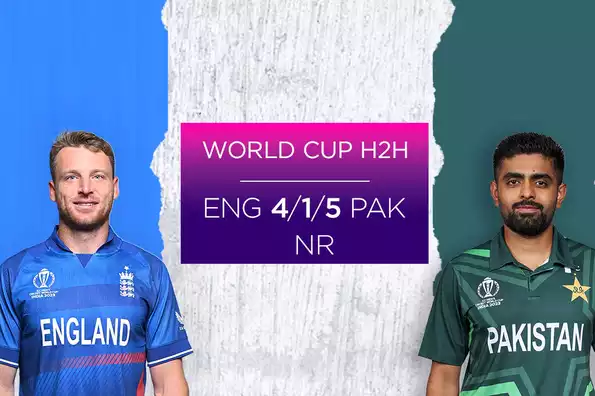
The rivalry between England and Pakistan in the Cricket World Cups is one of the most exciting and memorable in the history of the sport. Over the decades, these two teams have faced each other in numerous high-stakes encounters, producing thrilling matches, iconic performances, and unforgettable moments that have captivated cricket fans around the world. From England’s early dominance in the late 1970s and 1980s to Pakistan’s historic victories on home soil and beyond, each clash has showcased the best of strategy, skill, and competitive spirit.
These World Cup encounters have also been marked by dramatic twists, from low-scoring thrillers to record-breaking chases. Legendary players from both sides have left their mark, creating stories of heroism, resilience, and cricketing brilliance. The head-to-head record between England and Pakistan reflects not just statistics but decades of intense competition and memorable cricketing history.
England’s Spectacular Defence of a Low Score
On June 16, 1979, England and Pakistan met for the first time in a World Cup group match after having been in separate groups in the previous edition. England, led by the astute Mike Brearley, managed to score only 165/9 in their allotted 60 overs. Despite the low total, their disciplined bowling attack ensured a competitive contest. Mike Hendrick’s inspired fast bowling dismantled Pakistan’s top order, creating early pressure.
Captain Asif Iqbal tried to stabilize the innings, scoring crucial runs for Pakistan, but he lacked support from other batsmen and eventually ran out of partners. A piece of trivia from this game is Geoffrey Boycott, who, despite being known primarily for his batting, claimed 2 wickets, registering his career-best bowling figures of 2/14. England’s 14-run victory allowed them to top the group and set the tone for their campaign.
England’s Dominance and Hat-Trick of Wins
Convincing League Win
In the 1983 World Cup, played in a double round-robin format, England faced Pakistan in the first of two league encounters. Pakistan’s innings began poorly as they slipped to 67/4, with Zaheer Abbas rescuing the team with a resilient 83. Despite his efforts, Pakistan’s total of 193/8 in 60 overs proved insufficient.
England’s chase was steady, led by Graeme Fowler’s 78, supported by David Gower and Allan Lamb, who ensured a smooth victory in 50.4 overs. This win extended England’s dominance over Pakistan and showcased their consistent ability to chase moderate targets effectively.
Securing a Hat-Trick of Wins
The second encounter in 1983 was equally memorable. Pakistan posted 232/8, driven by Javed Miandad’s 67 and Ijaz Faqih’s unbeaten 42. England, undeterred, opened strongly with Graeme Fowler and Chris Tavare adding 115 for the first wicket. David Gower and Allan Lamb once again played pivotal supporting roles to guide England to victory, reinforcing their top-group position and helping them avoid facing defending champions West Indies in the semifinals.
Pakistan’s Home Advantage and Breakthrough Wins
Pakistan Opens Its Account
The 1987 World Cup, held in the Indian subcontinent, gave Pakistan a significant home advantage. In their first league game against England, Pakistan scored 239/7, thanks to solid contributions from Saleem Malik and Ijaz Ahmed, with Ijaz’s quickfire 59 providing a late boost.
England started well, with openers Graham Gooch and Chris Broad putting up a promising partnership, but the middle order failed to capitalize. Abdul Qadir starred with the ball, claiming 4/31 and dismantling the English batting lineup. Pakistan’s 18-run victory established them as a strong home team and marked their first World Cup win over England.
Back-to-Back Triumph
Just a week later, Pakistan faced England again and secured a second consecutive win. England posted 244, aided by fifties from Chris Athey and Mike Gatting, but Imran Khan’s clever death bowling limited their scoring opportunities, claiming four wickets in the process.
Pakistan’s response was anchored by Ramiz Raja’s 113, complemented by Saleem Malik’s 88. The two shared a 157-run partnership, allowing Pakistan to chase the target in 49 overs comfortably. These consecutive wins highlighted Pakistan’s dominance on home soil and ensured they topped the group stages.
The Great Escape and World Cup Glory
Rain Saves Pakistan
In a dramatic group stage encounter, Pakistan were bowled out for just 74 by England. Derek Pringle and Phil DeFreitas, along with Ian Botham, had the Pakistani batting lineup under complete control. England were 24/1 when rain intervened, resulting in a split of points. Despite the humiliation, Pakistan progressed to the semifinals with nine points, one more than Australia, proving that persistence and luck could go hand in hand in World Cup cricket.
The Final Showdown
The 1992 final between Pakistan and England remains one of the most iconic World Cup matches. After defeating New Zealand in the semifinals, Pakistan set a competitive 249-run target, led by fifties from Imran Khan and Javed Miandad, with contributions from youngsters Inzamam-ul-Haq and Wasim Akram.
England’s innings began disastrously at 69/4, before Neil Fairbrother and Allan Lamb added some resistance. However, Wasim Akram’s deadly swing bowling turned the game around, taking key wickets of Allan Lamb and Chris Lewis. Pakistan’s chase and disciplined bowling led them to their first World Cup triumph, with Akram winning Man of the Match, and Imran Khan celebrated as a national hero.
England’s Struggles Continue
Karachi Blues Persist
During the 1996 World Cup co-hosted by Pakistan, England sought redemption but were once again defeated. Pakistan’s 249 was achieved through consistent batting performances by Saeed Anwar, Ijaz Ahmed, and Inzamam-ul-Haq. England’s three half-centurions, Robin Smith, Mike Atherton, and Graham Thorpe, couldn’t sustain momentum, and Pakistan’s spinners Mushtaq Ahmed and Aamer Sohail controlled the middle overs efficiently to ensure a defendable total.
James Anderson Dominates
After missing the 1999 World Cup, England faced Pakistan in Cape Town during the 2003 edition. England posted 246, with contributions from Michael Vaughan and Paul Collingwood, but Pakistan struggled against James Anderson’s swing bowling. Anderson claimed four wickets, including golden ducks for Inzamam-ul-Haq and Mohammad Yousuf, dismantling Pakistan’s top order. England won by 131 runs, though neither team advanced past the group stage.
Pakistan’s Mercurial Triumph Over England
On June 3, 2019, Pakistan faced England at Trent Bridge in a high-stakes World Cup clash. Pakistan batted first, posting 348 runs with notable scores from Babar Azam, Mohammad Hafeez, and Sarfaraz Ahmed. England’s chase began promisingly with Joe Root (107) and Jos Buttler (103) sharing a 130-run partnership, but Pakistan’s disciplined bowling triggered a collapse.
England fell short at 334/9, 14 runs behind the target. This victory was significant for Pakistan as it demonstrated their ability to overcome formidable hosts under pressure, and highlighted the continuing unpredictable nature of Pakistan in World Cups.
FAQs
When did England and Pakistan first meet in a World Cup?
England and Pakistan first faced each other in the 1979 World Cup. England won a low-scoring thriller by 14 runs.
Who were the heroes in Pakistan’s 1992 World Cup final win?
Imran Khan and Wasim Akram starred in the final, setting a competitive total and taking crucial wickets. Their performance led Pakistan to victory.
Which England bowler dominated Pakistan in 2003?
James Anderson dismantled Pakistan’s batting lineup in Cape Town, taking four key wickets. His swing bowling left Pakistan struggling in the chase.
How did Pakistan defeat England in 2019?
Pakistan posted 348 runs with multiple contributions from their batting lineup. England fell short at 334, losing by 14 runs in a high-pressure game.
When did Pakistan secure consecutive World Cup wins against England?
Pakistan defeated England twice in the 1987 World Cup. Both victories were achieved with strong batting and effective bowling on home pitches.
Conclusion
The England vs Pakistan World Cup rivalry is a testament to cricketing drama, skill, and memorable performances. From England’s early supremacy in the late 1970s and early 1980s to Pakistan’s historic victories in 1987, 1992, and 2019, these matches have delivered thrilling encounters time and again. Each game has left fans with unforgettable moments and remarkable individual performances, cementing this rivalry as one of the most celebrated in cricket history. The story of England vs Pakistan in World Cups is not just about wins and losses, it’s about legacy, resilience, and the enduring magic of cricket on the world stage.
