
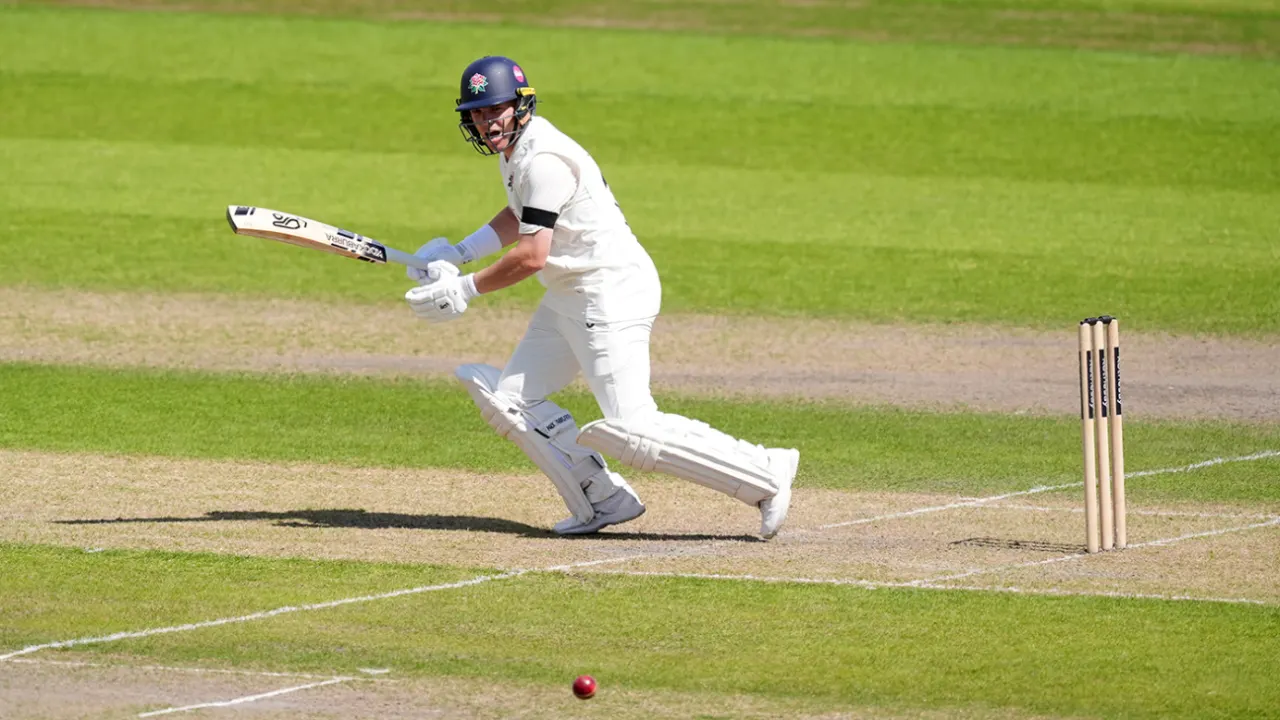
Glamorgan produced a performance of determination, discipline, and control to secure a commanding 154-run victory over Lancashire at Emirates Old Trafford. The result not only kept their promotion hopes alive in the Rothesay County Championship Division Two but also marked their first triumph at this venue since 1993.
The match was filled with momentum shifts, strong individual displays, and weather interruptions. Lancashire, who had been dismissed cheaply in the first innings, entered the final day with faint hopes of chasing down a record target. But Glamorgan’s bowlers proved clinical, ending the contest in clinical fashion before the final session.
This win propelled Glamorgan closer to securing a promotion spot, while Lancashire were left trailing behind, their ambitions damaged by another disappointing defeat. Let’s look at how the contest unfolded and why Glamorgan emerged as deserved victors.
Glamorgan’s First Innings Statement
Northeast Anchors the Batting
Sam Northeast played an innings of calm authority, scoring 132 runs in a manner that demonstrated his experience and technique. He paced his innings perfectly, ensuring Glamorgan avoided early collapses and built a substantial foundation. Northeast’s shot selection was precise, punishing loose deliveries while respecting quality bowling. His resilience under pressure kept Lancashire at bay, and partnerships at the other end allowed him to control the tempo. This innings laid the groundwork for Glamorgan’s competitive total and set the tone for the rest of the match.
Carlson’s Supporting Role
Kiran Carlson complemented Northeast brilliantly, rotating the strike and maintaining the scoreboard momentum. His ability to handle pressure and execute controlled shots prevented the innings from stagnating. Carlson’s footwork against pace and spin allowed him to negotiate tricky periods effectively. He played a crucial supporting role in building partnerships with both the top and middle order. His performance added depth to Glamorgan’s batting and ensured the first innings ended on a strong note.
Lancashire Bowlers Work Hard
Lancashire’s bowlers, led by James Anderson and Tom Bailey, bowled disciplined lines but struggled to take regular wickets. They created pressure at times, forcing defensive shots and testing Glamorgan’s patience. However, Northeast’s solid technique and Carlson’s composure nullified early breakthroughs. The bowlers’ persistence did limit scoring rates, but Glamorgan’s partnerships kept the innings advancing steadily. Ultimately, Lancashire’s effort was undermined by Glamorgan’s ability to absorb pressure and build meaningful stands.
Lancashire’s First Innings Collapse
Struggles Against Fernando
Asitha Fernando wreaked havoc in Lancashire’s first innings, using pace and swing to dismantle their top order. His inswinging deliveries repeatedly breached defensive techniques, leaving batters exposed. Fernando’s accuracy and movement made scoring opportunities scarce, forcing risky shots that often led to dismissals. Lancashire struggled to adapt to his variations, resulting in frequent wickets at crucial junctures. His performance laid the foundation for Glamorgan to gain a commanding first-innings advantage.
Top Order Fails to Fire
Lancashire’s top order, including Wells and Balderson, failed to respond to the early pressure, leading to a rapid collapse. Poor shot selection and hesitation compounded their vulnerability against Glamorgan’s disciplined attack. The lack of partnerships meant the middle order was left under constant stress. Their inability to build innings handed Glamorgan a psychological edge before the second innings began. This collapse left the Red Rose far behind in the contest from the outset.
Glamorgan Bowlers Dominate
Mason Crane and Ben Kellaway provided vital support to Fernando, maintaining tight lines and building pressure on the Lancashire batters. Their combined efforts meant Lancashire had no room to recover momentum, as boundaries were hard to come by. The bowlers executed plans with precision, picking up key wickets at regular intervals. This discipline frustrated the opposition and limited their ability to challenge Glamorgan’s control. Overall, the first-innings dominance put Glamorgan firmly in command of the match.
Glamorgan’s Second Innings Push
Carlson Leads with Century
Kiran Carlson once again rose to the occasion in the second innings, scoring a fluent 108 that placed Glamorgan in control. His confident stroke play and intelligent shot selection allowed the team to accumulate runs rapidly. Carlson’s ability to counterattack while rotating the strike kept Lancashire on the back foot. His innings built partnerships with key batters and pushed the score to an imposing total. This century effectively removed any realistic hopes Lancashire had of chasing down the target.
Northeast Adds More Runs
Sam Northeast continued his consistent form, adding another valuable contribution in the second innings. His calm approach and selective aggression ensured Glamorgan maintained pressure while extending their lead. Northeast’s partnership with Carlson stabilized the innings and frustrated the Lancashire attack. He played a pivotal role in converting the foundation built in the first innings into a commanding advantage. This effort gave Glamorgan a platform to declare and set a near-impossible target.
Declaration at the Right Time
Glamorgan declared at 348 for 7, a strategic decision that maximized their advantage while giving enough overs to bowl Lancashire out again. The declaration reflected confidence in their bowling attack and belief in controlling the game. By setting a challenging target, they left Lancashire with a mountain to climb in a limited time. The timing of the declaration was crucial in maintaining pressure on the opposition. This calculated move demonstrated tactical awareness and the team’s intent to secure victory.
Lancashire’s Final Innings Fight
Harris Keeps Hopes Alive
Marcus Harris provided a determined resistance with a fighting 61, keeping Lancashire’s faint hopes alive in the chase. He applied himself well, negotiating difficult spells and punishing loose deliveries. Harris’s experience allowed him to anchor partnerships and buy time for the lower order. Despite his efforts, runs came slowly, reflecting the sustained pressure from Glamorgan’s bowlers. Ultimately, Harris’ innings highlighted his resilience, but he could not prevent the team from slipping further behind.
Bailey and Green Depart Quickly
Nightwatchman Tom Bailey fell early to Fernando’s inswinging yorker for 16, leaving Lancashire reeling further. Chris Green followed soon after, top-edging a sweep to Carlson off Kellaway for 9. These dismissals ended any momentum Lancashire might have generated from Harris’ resistance. The rapid wickets underscored Glamorgan’s dominance in the match. By reducing the opposition to 270 for 7, Glamorgan effectively removed all hope of a successful chase.
Collapse After Harris’ Dismissal
Harris’ dismissal at short leg to Crane was the turning point, leaving Lancashire with a minimal chance of recovery. Tom Hartley and George Balderson struggled to establish a partnership under sustained pressure. The target remained daunting, and Glamorgan’s bowlers continued to attack relentlessly. Every scoring opportunity was limited, forcing errors from the lower order. By the time the final wickets fell, Glamorgan had fully asserted control, leaving Lancashire with no realistic chance.
Glamorgan Bowlers Seal the Win
Crane’s Impact with Spin
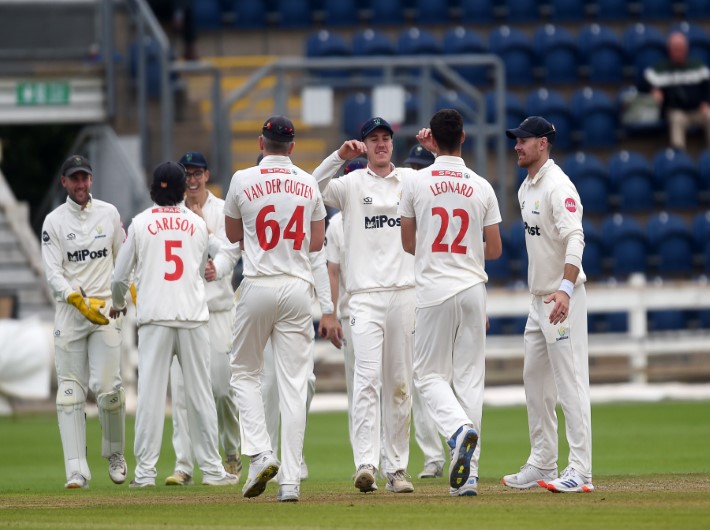
Mason Crane’s performance was pivotal, taking nine wickets across both innings and providing consistent breakthroughs. His variations in flight, pace, and turn continually tested Lancashire’s batters. Crane’s ability to bowl attacking lines ensured key wickets fell at crucial moments. His control and tactical awareness allowed Glamorgan to maintain dominance throughout the final innings. Crane’s efforts ultimately sealed the match and contributed significantly to Glamorgan’s historic win.
Kellaway’s Crucial Breakthroughs
Ben Kellaway played a supporting yet vital role, taking 3 for 82 in the second innings. His disciplined bowling limited scoring opportunities and generated pressure on the Lancashire lower order. Kellaway’s precise line and length complemented Crane’s spin, ensuring wickets fell at regular intervals. By breaking stubborn partnerships, he kept the opposition on the back foot. His performance highlighted the importance of support bowlers in sustaining a dominant bowling attack.
Fernando’s Early Strikes
Asitha Fernando set the tone for Glamorgan’s victory with early wickets in both innings. His pace, swing, and accuracy dismantled the Lancashire top order quickly. Fernando’s ability to consistently strike early created a psychological advantage for his team. He remained disciplined, targeting key batters and forcing mistakes. His early impact was crucial in building pressure and putting Glamorgan in full control of the contest.
Lancashire’s Lower Order Resistance
Balderson Swings Freely
George Balderson attempted to counterattack in the final innings, hitting boundaries and frustrating Glamorgan’s bowlers briefly. His aggressive approach added some quick runs, but the target remained unreachable. Balderson tried to build partnerships with the tail, but wickets fell at regular intervals. Despite his effort, he could not alter the overall outcome of the match. His display highlighted resilience but also emphasized the dominance of Glamorgan’s bowling attack.
Anderson Shows Fighting Spirit
James Anderson entertained with his trademark reverse sweeps and controlled aggression, delaying the inevitable. His experience allowed him to rotate strike effectively with Balderson. Despite his efforts, the challenging target and disciplined bowling proved too much. Anderson’s presence showcased fighting spirit and drew admiration from the crowd. Ultimately, his resistance only marginally delayed Glamorgan’s final breakthrough.
Final Wicket Falls
The match concluded when Anderson was bowled by Crane, giving him his third wicket of the innings. The dismissal ended Lancashire’s last glimmer of hope and allowed Glamorgan to celebrate a historic victory. The final pair had added just 25 runs, emphasizing Glamorgan’s control. Crane’s exceptional match figures of 9 for 126 reflected his impact. With this final wicket, Glamorgan completed a 154-run win at Old Trafford for the first time since 1993.
FAQs
Who were the standout performers for Glamorgan?
Sam Northeast and Kiran Carlson provided crucial runs, anchoring both innings with composure. Mason Crane and Asitha Fernando shone with the ball, dismantling Lancashire’s batting.
How did Glamorgan gain an advantage in the match?
Their first-innings lead and Carlson’s century in the second innings created scoreboard pressure. A timely declaration ensured Lancashire faced an impossible chase.
What went wrong for Lancashire?
Their batting collapse in the first innings left them chasing the game from the start. Despite Harris’ resistance, they lacked partnerships to mount a fightback.
How significant was this win historically?
It was Glamorgan’s first victory at Old Trafford since 1993, ending a 32-year drought. The win carried symbolic importance alongside the points gained.
What does this result mean for the Division Two promotion race?
Glamorgan strengthened their push for Division One, building momentum for the final matches. Lancashire’s defeat widened the points gap, making their promotion hopes unlikely.
Conclusion
Glamorgan’s 154-run victory over Lancashire was a complete display of batting depth, tactical awareness, and disciplined bowling. Northeast, Carlson, Fernando, and Crane led the charge, keeping Lancashire under constant pressure. Despite Harris’ and Anderson’s resistance, the hosts never recovered from their first-innings deficit. This historic win strengthens Glamorgan’s promotion bid in Division Two while leaving Lancashire trailing, emphasizing the gulf between the two teams in the race for promotion.
